


What Are the 2026 Top Types of 40 Ft Storage Containers?
The 40 ft storage container is becoming a practical choice for warehouses, construction sites, retailers, and expanding manufacturers in 2026. Its appeal is simple: long internal space, strong steel walls, and easier transport than permanent construction. Yet “top type” depends on the job. A dry van may suit boxed inventory, while a high-cube unit offers extra vertical clearance for shelving and bulky equipment.
Industry data supports this wider demand. UNCTAD’s Review of Maritime Transport 2024 reported continued growth in global container shipping capacity and fleet renewal. That trend increases the availability of used containers, but condition varies sharply. Drewry’s Container Census and Leasing Annual Review has also highlighted the scale and age diversity of the worldwide box fleet. Buyers should therefore inspect doors, flooring, roof seams, corner posts, and previous repairs. A fresh paint job can hide problems.
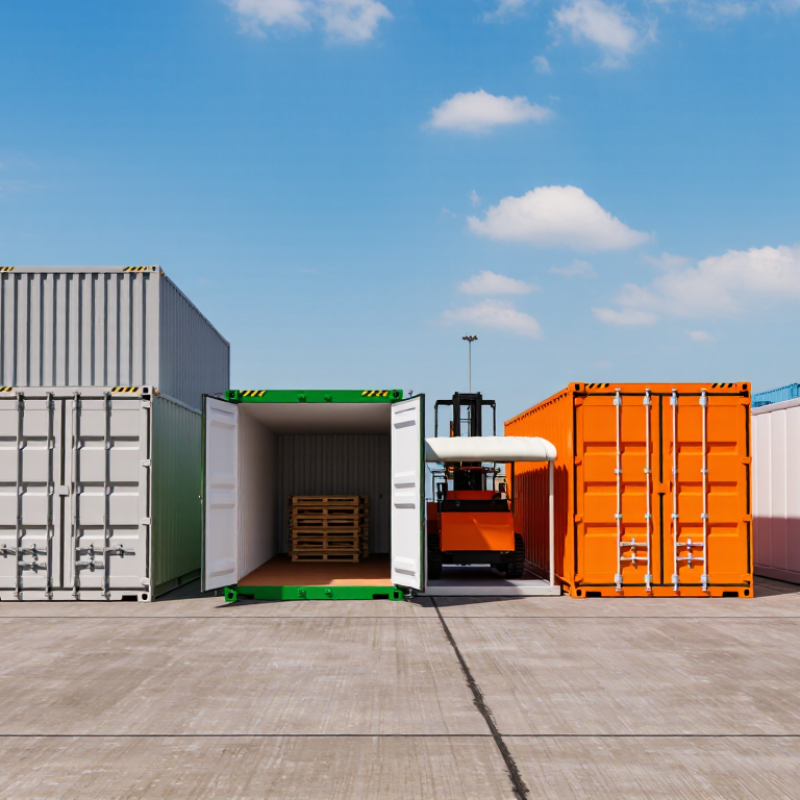
For 2026, standard dry, high-cube, side-opening, open-top, and refrigerated containers are likely to attract the most attention. High-cube models are especially useful where pallets or tall racks require additional headroom. Side-opening units provide a wider access zone, almost like a temporary loading bay. Open-top designs help store machinery that cannot pass through conventional doors. Refrigerated models serve temperature-sensitive goods, though electricity, servicing, and monitoring add real operating costs.
Not every forecast is equally dependable. Storage demand changes with construction cycles, trade volumes, and regional supply. Reported market growth can also combine shipping, leasing, and storage applications. That makes direct comparison imperfect. The best 40 ft storage container is not always the newest or cheapest. It is the one whose structure, access, ventilation, and operating costs match the intended use.
What Defines a 40-Foot Storage Container in 2026
What Are the 2026 Top Types of 40 Ft Storage Containers?
A 40-foot storage container is not simply a long steel box. ISO 668:2020 defines its nominal external length as 12.192 metres. Standard external width is 2.438 metres. Standard height is about 2.591 metres, while a high-cube unit reaches approximately 2.896 metres. These measurements shape transport compatibility, stacking safety, and site planning. The UNCTAD Review of Maritime Transport 2024 confirms that maritime shipping carries over 80% of global merchandise trade by volume. Therefore, many storage units still follow freight-container dimensions, even after leaving ports. A standard dry container usually offers about 67 cubic metres internally. A high-cube model provides roughly 76 cubic metres, depending on floor thickness and fittings. Figures vary slightly.
The main 2026 types include standard dry, high-cube, side-opening, and open-top containers. Dry units suit boxed inventory and equipment. High-cube units help with tall shelving, insulation, or bulky goods. Side-opening designs improve access when forklifts cannot reach the rear. Open-top units support irregular loads, but they need careful weather protection. Real inspections matter more than catalogue numbers. Check door seals, corner castings, floor condition, and internal width. One overlooked issue is condensation. It can damage stored materials quietly.
Tips: Measure the access route, not only the storage area. Allow clearance for delivery equipment and door swing. Compare usable volume with pallet layout. A 40-foot container may fit more, yet waste space without shelving. Review ISO dimensions and local placement requirements before ordering. Industry forecasts often change, and practical site limits remain easy to underestimate.
| Container Type | Typical External Dimensions (L × W × H) |
Approximate Internal Volume | Typical Door Configuration | Common Storage Applications | Key 2026 Defining Features | Important Limitations |
|---|---|---|---|---|---|---|
| 40-Foot Standard Dry Container | 12.19 m × 2.44 m × 2.59 m 40 ft × 8 ft × 8 ft 6 in |
Approximately 67.7 m³ Approximately 2,390 ft³ |
Double end doors on one short side | General equipment, packaged goods, furniture, records, tools, and household storage | Weather-resistant steel body, lockable cargo doors, standardized footprint, and broad availability for general-purpose storage | Interior height is lower than a high-cube unit; cargo must be loaded through the end doors unless modified |
| 40-Foot High-Cube Dry Container | 12.19 m × 2.44 m × 2.90 m 40 ft × 8 ft × 9 ft 6 in |
Approximately 76.4 m³ Approximately 2,700 ft³ |
Double end doors on one short side | Bulky inventory, palletized goods, commercial stock, machinery parts, and self-storage projects requiring extra height | Provides about 30 cm of additional exterior height compared with a standard 40-foot container, increasing usable vertical space | May require greater clearance at the delivery site; height restrictions can affect placement under structures |
| 40-Foot Side-Door Container | Usually based on a 40-foot standard or high-cube body Approx. 12.19 m × 2.44 m × 2.59–2.90 m |
Approximately 67.7–76.4 m³ | End doors plus one or more large side-opening doors | Retail fixtures, long items, event equipment, construction materials, and storage requiring selective access | Side access allows operators to reach cargo along the container length without unloading the entire unit | Side doors can reduce wall strength, increase tare weight, and require additional clearance beside the container |
| 40-Foot Open-Top Container | Approximately 12.19 m × 2.44 m × 2.59 m Some versions use a high-cube height |
Approximately 67.7–76.4 m³ | End doors; removable roof bows and a tarpaulin cover are commonly used | High or oversized items, scrap materials, logs, machinery, and goods loaded by crane | Flexible top loading and unloading when cargo cannot pass through standard door height or width | Tarpaulin protection is generally less secure against weather and unauthorized access than a solid roof |
| 40-Foot Flat-Rack Container | Approximately 12.19 m × 2.44 m Height varies by design; end walls may be fixed or collapsible |
Not comparable to an enclosed container; cargo space is open-sided and open-top | Open ends or fixed end walls; no conventional enclosed side doors | Heavy machinery, vehicles, pipes, tanks, structural steel, and oversized cargo | Reinforced base and lashing points support concentrated or out-of-gauge loads that cannot fit inside an enclosed container | Does not provide enclosed, weatherproof storage; cargo usually needs separate covering and securing |
| 40-Foot Refrigerated Container | Approximately 12.19 m × 2.44 m × 2.90 m External dimensions are generally high-cube size |
Approximately 67–68 m³, depending on insulation and equipment | Insulated end doors with a refrigeration unit mounted at one end | Temperature-sensitive food, pharmaceuticals, flowers, specialty chemicals, and controlled-environment storage | Insulated walls, active temperature control, airflow channels, and monitoring capability for defined temperature ranges | Requires reliable electrical power, service access, and clearance for the refrigeration unit; usable interior volume is reduced by insulation |
| 40-Foot Double-Door Container | Approximately 12.19 m × 2.44 m × 2.59–2.90 m | Approximately 67.7–76.4 m³ | Double doors at both short ends | Long materials, organized stock rotation, warehouse overflow, and storage sites requiring drive-through access | Two-sided access improves loading efficiency and permits first-in, first-out inventory arrangements | More door seals and hardware require inspection; placement needs working clearance at both ends |
| 40-Foot Insulated Storage Container | Usually 12.19 m × 2.44 m × 2.59–2.90 m Dimensions vary with insulation system |
Typically lower than the equivalent dry container because of insulated wall thickness | Insulated end doors; optional access configurations may be available | Temperature-buffered storage, sensitive equipment, archives, temporary workspaces, and goods needing reduced heat transfer | Insulated panels help moderate internal temperature changes without necessarily providing active refrigeration | Insulation alone does not maintain a precisely controlled temperature; ventilation and moisture management remain important |
Related Posts
-

What Is the Best 40 ft Shipping Container for Global Buyers?
-

How to Efficiently Load a 40 ft Container for Shipping?
-
Why Choose a 40 ft Storage Container?
-

What Are the Uses of 40ft Containers in Shipping?
-

Top Benefits of Using Second Hand Storage Containers for Your Next Move?
-

Why Choose Shipping Containers for Your Next Project?