What Are the Top Types of Steel Shipping Containers?
Steel shipping containers are built for demanding transport, storage, and handling conditions. Their familiar corrugated walls, reinforced corners, and heavy doors are designed to withstand repeated movement. Still, “steel container” does not describe one standard layout. Size, access, insulation, and cargo requirements all shape the right choice.
The main types serve distinct purposes. Standard dry containers carry boxed goods, tools, and palletized materials. High-cube models provide extra vertical room for bulky loads. Open-top containers allow cargo to be loaded from above, while flat racks accommodate oversized items that need side access or no full walls. Refrigerated containers add insulated panels and cooling equipment, with steel components supporting the structure. Details matter.
Choosing among them takes more than comparing exterior dimensions. Check the stated capacity, door opening, floor condition, seals, and visible corrosion. A container that looks sound outside may have damage or wear inside. Ask the supplier for clear specifications and condition details, then match those facts to the intended use. Not always easy. Terminology and available configurations can vary between sellers, so confirm what a listing actually includes. This guide introduces the top types of steel shipping containers and explains where each may fit. A careful comparison can prevent a costly mismatch, though no single type is ideal for every job.
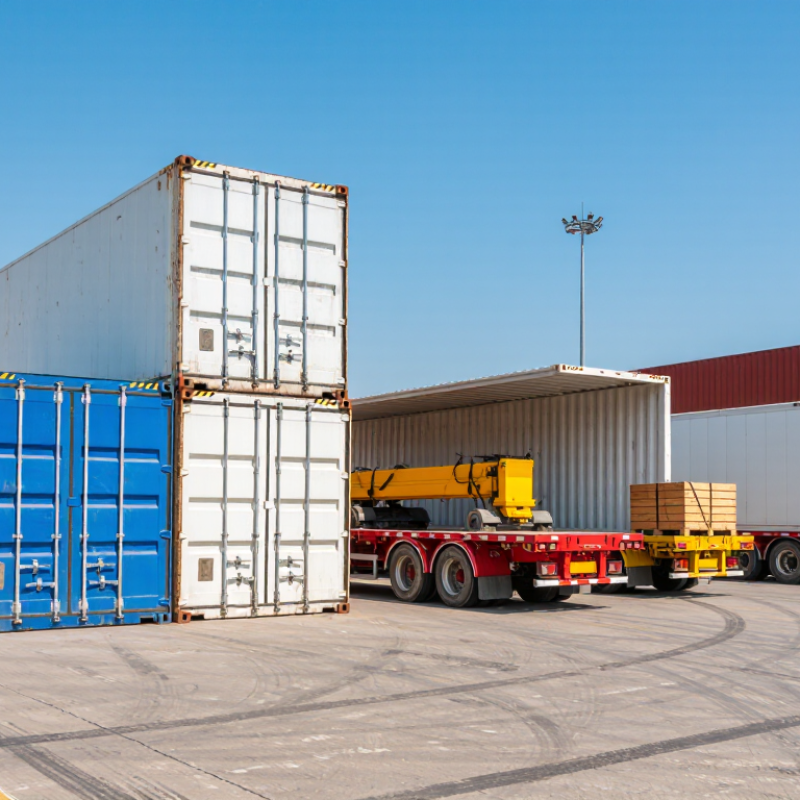
How Steel Shipping Containers Are Classified
What Are the Top Types of Steel Shipping Containers?
How Steel Shipping Containers Are Classified
Steel shipping containers are classified by their dimensions, construction, and intended operating conditions. These categories can overlap: a high-cube container, for example, may also be a general-purpose dry container. ISO 668 sets dimensions and ratings for Series 1 freight containers, while ISO 1496 covers specifications and testing. Together, these standards give buyers and operators a shared basis for checking fit and performance.
General-purpose dry containers carry ordinary packaged freight. High-cube models add height, while open-top units allow loading from above. Flat-racks support oversized cargo; refrigerated containers use insulated panels and cooling equipment within a structural frame. Tank containers place a vessel inside a steel frame. Different jobs. A label alone does not confirm a unit’s condition, payload, or suitability, so check its rating plate and inspection records.
Classification also matters at network scale. UNCTAD’s Review of Maritime Transport 2024 reports that global container-port throughput reached 858.4 million TEUs in 2023, up 2.4 percent from 2022. TEUs measure capacity, not the number of individual containers or their types. That distinction matters. In practice, categories can feel less tidy than a checklist suggests: modifications and wear may change how a container should be handled, even when its basic type remains unchanged.
Standard Dry Steel Shipping Containers
Standard Dry Steel Shipping Containers
Standard dry steel shipping containers are enclosed units designed to protect ordinary cargo from rain, wind, and road dust. Their steel frames support handling, while corrugated wall panels add rigidity. The doors usually have locking bars and rubber seals. They are not climate-controlled. That matters when cargo is sensitive to heat or humidity.
Common lengths include 20 and 40 feet, but internal dimensions vary by model and condition. Check the actual unit before planning a load. A tape measure can prevent awkward surprises around pallets, door clearance, or cargo height. The interior floor is often timber, so inspect it for soft spots, splinters, and lingering moisture. Small details matter.
Before use, examine the roof, corners, door seals, and lower rails for dents, rust, or signs of water entry. A container may look sound from outside and still have a poor seal. Not always obvious. For storage or transport, match the container’s size and rated capacity to the cargo, then confirm its specifications with the supplier. I would not assume every “standard” unit has identical dimensions or condition.
High-Cube Steel Shipping Containers
High-cube steel shipping containers provide extra vertical space while keeping a familiar footprint. A typical unit measures about 9 feet 6 inches tall externally, roughly one foot taller than a standard-height container. Exact dimensions vary, so check the specification sheet before planning a load. For tall equipment, stacked cartons, or bulky lightweight goods, that clearance can make packing easier. Measure twice.
The extra volume does not mean extra payload. Maximum gross weight and tare weight still determine how much cargo a container can carry. A high-cube unit may reduce wasted air, yet heavy freight can reach its weight limit before filling the available space. Door-opening height matters too: an item may fit inside but fail to clear the doorway. Check carefully.
Corrugated steel walls and a strong frame are suited to repeated handling, within the container’s rated limits. More enclosed space can also trap warm, moist air. Temperature changes may lead to condensation on cartons or metal surfaces. Dry cargo, sound packing, and suitable moisture control can help reduce that risk. Compare internal dimensions, door measurements, and payload data with the actual cargo, not just the stated cubic capacity.
What Are the Top Types of Steel Shipping Containers? - High-Cube Steel Shipping Containers
| Container Type |
Nominal External Size (L × W × H) |
Approx. Internal Volume |
Typical Features |
Common Uses |
| 20-Foot Standard Dry |
6.06 × 2.44 × 2.59 m
(20 × 8 × 8 ft 6 in) |
About 33 m³ |
Enclosed steel cargo unit with end doors; standard-height design. |
Dense or heavy cargo, machinery, packaged goods, and general freight. |
| 40-Foot Standard Dry |
12.19 × 2.44 × 2.59 m
(40 × 8 × 8 ft 6 in) |
About 67 m³ |
Twice the nominal length of a 20-foot unit, with standard external height. |
Palletized freight, furniture, consumer goods, and other high-volume cargo. |
| 40-Foot High-Cube Dry |
12.19 × 2.44 × 2.90 m
(40 × 8 × 9 ft 6 in) |
About 76 m³ |
Approximately 30 cm (1 ft) taller externally than a standard-height container. |
Bulky, lightweight cargo and shipments that benefit from extra vertical space. |
| 45-Foot High-Cube Dry |
13.72 × 2.44 × 2.90 m
(45 × 8 × 9 ft 6 in) |
About 86 m³ |
Longer high-cube format; availability and transport acceptance can depend on the route and equipment. |
Large-volume freight where compatible handling and transport equipment is available. |
| Open-Top Dry |
Commonly 6.06 or 12.19 m long × 2.44 m wide
(20 or 40 × 8 ft) |
Varies by length and design |
Removable roof covering or open roof; many models have end doors for loading. |
Tall or top-loaded cargo, including machinery and materials handled by crane. |
| Flat Rack |
Commonly 6.06 or 12.19 m long × 2.44 m wide
(20 or 40 × 8 ft) |
Not applicable; open platform design |
Heavy-duty floor with end walls; some versions have collapsible end walls and no side walls or roof. |
Oversized, heavy, or awkwardly shaped cargo such as vehicles and industrial equipment. |
|
Dimensions and volumes are approximate nominal figures. Actual internal dimensions, payload limits, and features vary by container design and manufacturer; check the unit’s specification plate before loading.
|
Choosing the Right Container for Cargo and Transport Needs
Choosing the right steel shipping container starts with the cargo, not the container label. A standard 20-foot unit can suit dense, compact loads, while a 40-foot unit offers more floor space for bulky goods. High-cube containers add roughly one foot of interior height, useful for tall cartons or equipment. Measure the cargo and its packaging. Small details matter.
Open-top containers allow loading from above, which helps when cranes handle tall or awkward items. Flat racks have end walls and exposed sides, making them practical for oversized machinery that cannot fit through standard doors. Refrigerated containers protect temperature-sensitive goods, but they need the correct set point and a route with reliable power access. Extra space is not always the answer.
Before booking, compare the cargo’s dimensions and weight with the container’s internal measurements, payload rating, and door opening. Leave room for safe loading and secure fastening. Check how the container will be lifted at each transfer point, too. A suitable unit on paper may be awkward at a small loading site. It is easy to overlook that. The best choice depends on the full journey, including handling equipment, weather exposure, and unloading plans.