Why Choose a 20 ft Shipping Container?
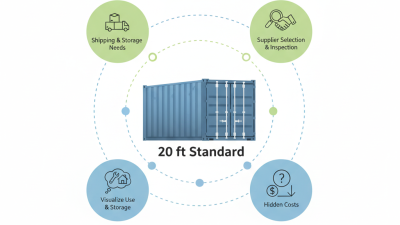
Choosing the right storage or transport solution often begins with a practical question: why choose a 20 ft shipping container? This widely used container offers a useful balance between capacity, mobility, and cost. Its standard external length is about 20 feet, while internal measurements vary by manufacturer and model. That difference matters. Always confirm the specification sheet before planning shelves, machinery, or pallet layouts.
A 20 ft shipping container can support construction storage, business inventory, temporary workspace, and approved international freight. Its compact footprint fits many driveways, yards, and commercial sites more easily than a 40-foot unit. A forklift may handle loaded pallets efficiently, while corner castings allow compatible lifting equipment to move the container safely. Weather-resistant steel protects contents from rain and dust, but it does not eliminate condensation. Ventilation, moisture control, and raised flooring may still be necessary.
The decision is not perfect for every project. A 20 ft unit can become crowded when items require wide access or frequent sorting. Delivery access also deserves careful attention. Measure gates, turning areas, overhead cables, and ground conditions before ordering. Local placement rules, transport requirements, and certified equipment should guide the installation. I have found that small planning mistakes often create larger costs than the container itself. This guide examines capacity, durability, transport practicality, customization, and long-term value, helping readers compare real needs with realistic limitations. A careful choice supports safer handling, clearer budgeting, and fewer surprises.
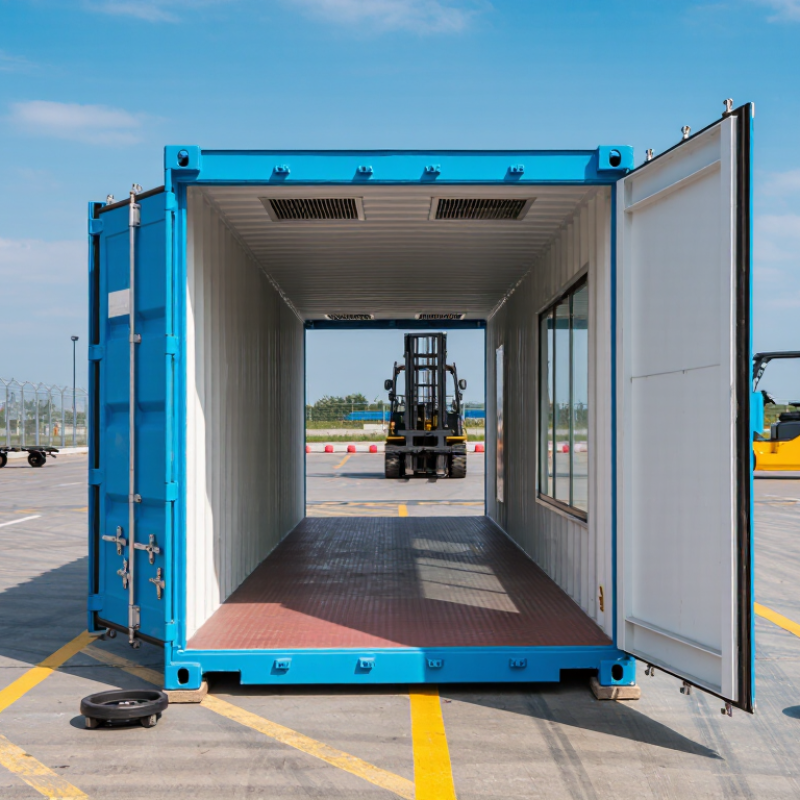
20-Foot Shipping Container: Definition and Standard Features
A 20-foot shipping container is a standardized steel unit designed to move cargo by sea, rail, and road. Its name refers to the external length, which is approximately 20 feet. Standard dimensions are about 8 feet wide and 8 feet 6 inches high. Internal measurements are smaller because of the walls and framing. Details matter.
Most units include corrugated weather-resistant steel panels, reinforced corner castings, and double cargo doors with vertical locking bars. The floor commonly uses thick marine-grade plywood over steel cross-members. Forklift pockets and ventilation openings are also typical features.
A standard container often weighs between 2,200 and 2,400 kilograms when empty. Its allowable payload may exceed 28,000 kilograms, but the exact limit depends on the construction and certification plate.
In practical inspections, I check the door seals, floor condition, roof, and locking hardware before relying on any unit. Water stains, soft flooring, or a door that sticks can create expensive problems. The internal height may also feel limited when storing tall equipment. That surprised me during an early loading assessment. Measurements should be taken inside the actual container, not copied from a general specification sheet. Production tolerances, repairs, and age can change usable space.
Key Advantages of Choosing a 20-Foot Container
A 20-foot shipping container offers a practical balance of capacity, handling, and cost. Its standard footprint is about 20 feet long and 8 feet wide, with roughly 33 cubic meters of internal space. That size suits household storage, workshop equipment, seasonal inventory, and small construction projects. It is easier to position on a compact site than a 40-foot unit. Transport planning also feels simpler because access requirements are usually less demanding.
The strongest advantage is controlled organization. Shelving, labeled bins, and a clear center aisle can turn an empty steel box into efficient storage. A 20-foot container can also reduce unused space, which matters when inventory changes often. However, it is not always the cheapest choice. Heavy equipment may reach the payload limit before the available volume is filled. Condensation can also affect sensitive items if ventilation and moisture control are ignored. These details are easy to underestimate.
Tips: Measure the delivery route, gate width, and ground surface before ordering. Check the door opening, floor condition, locking bars, and roof for damage. Place heavier items low and near the center, then secure them against movement. Leave small gaps around stored goods for airflow. Keep an updated inventory near the entrance. A basic inspection checklist may seem excessive, but it can prevent expensive surprises later. Choose a unit with the right internal height, too; standard height works well, while high-cube space may be unnecessary for simple storage.
Why Choose a 20 ft Shipping Container? - Key Advantages of Choosing a 20-Foot Container
| Evaluation Dimension |
Typical 20-Foot Dry Container Data |
Key Advantage |
| External dimensions |
20 ft L × 8 ft W × 8 ft 6 in H
(6.06 m × 2.44 m × 2.59 m) |
Compact footprint for ports, warehouses, construction sites, and urban locations. |
| Internal dimensions |
Approximately 19 ft 4 in L × 7 ft 8 in W × 7 ft 10 in H
(5.90 m × 2.35 m × 2.39 m) |
Provides practical enclosed storage space while remaining easy to position and access. |
| Internal capacity |
Approximately 33.2 m³
(about 1,172 ft³) |
Suitable for general cargo, equipment, building materials, household goods, and inventory storage. |
| Typical tare weight |
Approximately 2,200–2,400 kg
(4,850–5,290 lb) |
Lower empty weight can simplify handling, transport planning, and placement. |
| Maximum gross weight |
Up to approximately 30,480 kg
(67,200 lb), subject to the container rating and local regulations |
Offers a high load-bearing capability for dense or heavy cargo. |
| Typical payload |
Approximately 28,000 kg
(61,700 lb), calculated from the rated gross weight less tare weight |
Well suited to heavy cargo that may reach its weight limit before filling the available volume. |
| Floor area |
Approximately 14.0 m²
(about 151 ft²) |
Creates useful storage or workspace without requiring the footprint of a longer container. |
| Handling and placement |
Designed for standardized intermodal handling by road, rail, and sea. |
Easy to relocate and integrate into established logistics networks. |
| Best-fit applications |
Export shipments, machinery, tools, retail inventory, construction supplies, archives, and on-site storage. |
A balanced option when cargo density, available space, and transport flexibility are important. |
Note: Dimensions, tare weight, payload, and maximum gross weight vary by manufacturer, container age, structural design, and applicable transport regulations. Always confirm the specification plate and local weight limits before loading or transporting.
Common Uses for 20-Foot Shipping Containers
Why Choose a 20 ft Shipping Container?
Common Uses for 20-Foot Shipping Containers
A 20-foot shipping container offers practical space without overwhelming a small site. Its compact footprint fits beside workshops, farms, building projects, and commercial properties. Many users choose it for equipment storage, seasonal inventory, tools, or protected materials. A standard internal layout can hold shelving, pallets, workbenches, and hand carts. Leave clear walking space. Crowded storage becomes difficult to inspect and unsafe to manage.
On construction sites, the container can serve as a temporary tool room or secure site office. Basic insulation, lighting, ventilation, and electrical work may improve comfort. These modifications should follow local building and fire requirements. Farmers may use one for dry feed storage, irrigation equipment, or maintenance supplies. Ventilation matters here. Moisture can damage contents faster than expected.
Small businesses sometimes convert 20-foot units into workshops, pop-up sales spaces, or document storage rooms. A level foundation helps prevent door problems and uneven loading. Check the roof, floor, seals, and locking points before purchase or rental. Condition varies widely. I have seen owners focus on appearance and overlook worn flooring. That mistake can become expensive. A simple inspection by a qualified technician can reveal corrosion, leaks, or structural concerns before the container reaches the site.
Cost, Space, and Transport Considerations
Why Choose a 20 ft Shipping Container?
Cost, Space, and Transport Considerations
A 20 ft shipping container often suits projects with controlled storage needs. Its internal capacity is usually close to 33 cubic meters, depending on construction. That space can hold equipment, boxed inventory, or several standard pallets. However, cubic capacity can mislead. Poorly shaped items may leave expensive empty corners.
Cost is often the practical advantage. A 20 ft unit usually costs less to move than a 40 ft unit. It also needs less loading space and may reduce handling charges. Yet the price per cubic meter can be higher. The math is not always tidy. Request a full quote covering delivery, collection, ground preparation, and possible waiting time.
Transport access can decide the choice. A shorter container is easier to position beside a workshop, farm building, or narrow service road. Many delivery vehicles still require firm ground, overhead clearance, and turning space. Measure gates and corners before ordering. A container may fit the site but not the route. In my experience, this simple mistake creates more expense than the container itself. Check the container’s tare weight, payload rating, and local road limits with the carrier. These figures vary by unit and jurisdiction. Leave some flexibility, because real loading rarely matches the first spreadsheet.
How to Decide Whether a 20-Foot Container Fits Your Needs
Why Choose a 20 ft Shipping Container?
How to Decide Whether a 20-Foot Container Fits Your Needs
A 20-foot container usually offers about 33 cubic meters of internal space. Its typical maximum payload approaches 28,000 kilograms, depending on the container’s tare weight and local road limits. ISO 668:2020 defines the standard external dimensions, but usable capacity varies with wall thickness, doors, and flooring. Measure the cargo, not only the container.
Choose this size when your goods are dense, stackable, or moderately bulky. Machinery parts, boxed tools, ceramics, and bagged materials often use its weight capacity efficiently. A 20-foot unit also needs less yard space and may simplify loading at smaller warehouses. Check the pallet pattern first. A few centimeters can change the final count.
UNCTAD’s Review of Maritime Transport 2024 reports that global seaborne trade reached about 12.3 billion tonnes in 2023. That scale does not mean a larger container is always better. A 40-foot unit provides more cubic space, but empty air still costs money. Consider shipment frequency, handling equipment, delivery access, and cargo density. Do not ignore axle restrictions after unloading. The container may fit the vessel, yet fail at the final delivery point. A clean calculation can still be wrong when packaging changes. Allow practical clearance, then test one real loading plan.
Why Choose a 20 ft Shipping Container?
How to decide whether a 20-foot container fits your needs
33.2 m³
Typical internal volume
5.90 m
Typical internal length
≈28,000 kg
Typical maximum payload
A 20-foot dry container is often suitable for compact, heavy, or moderately sized cargo. Check the cargo length, width, height, door clearance, loading method, and total weight before choosing. Dimensions and payload can vary slightly by container design and local transport regulations.